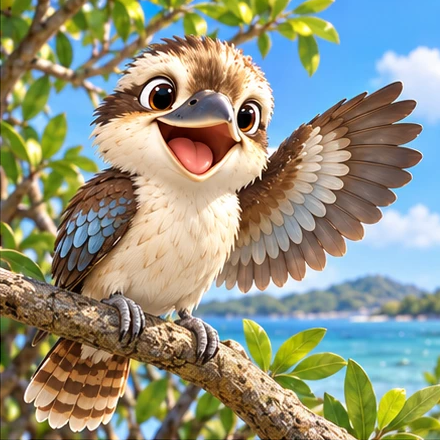
A little sound
A hum, whistle, chirp or song. A short musical pattern can help a friend recognise a message.
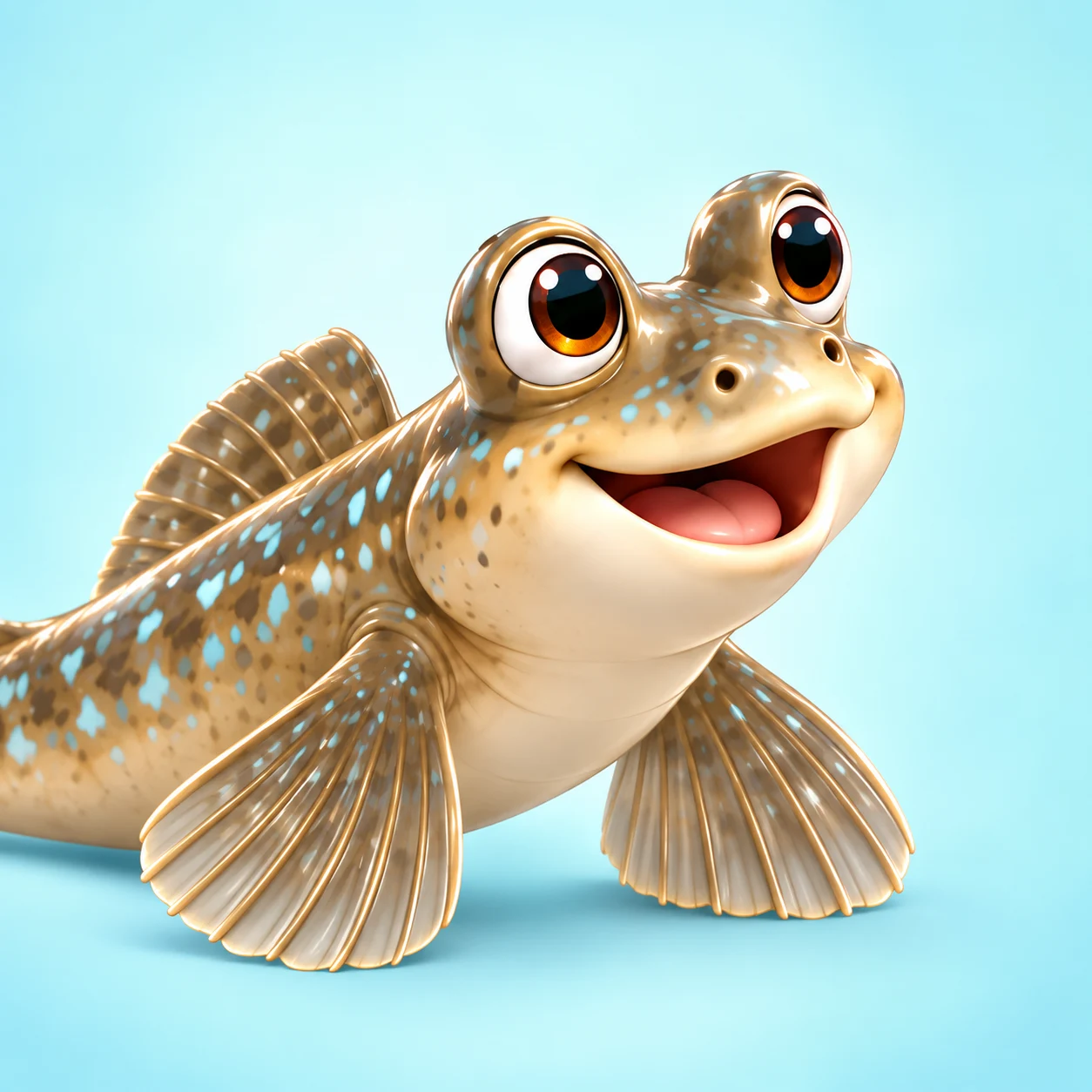 Raffy’sOcean Friends
Discover Oceanese
How do you say hello with a fin, a flipper or a pair of claws?
Welcome to Oceanese, the language Raffy and his friends created to understand one another.
Listen to Oceanese ↓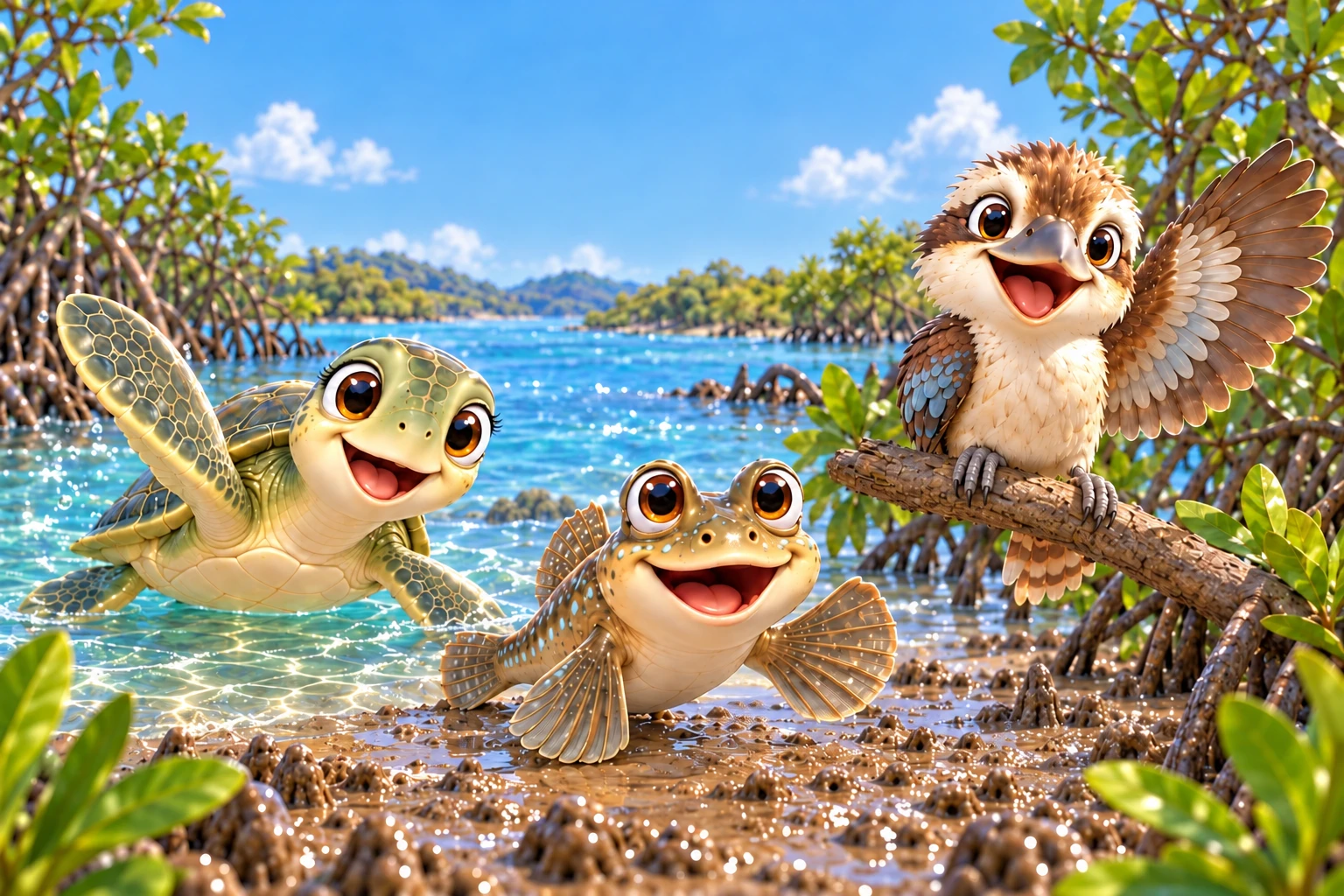
Invented together. Shared by everyone.
Raffy and his friends invented Oceanese so they could understand one another.
Some can sing. Some have fins to wave or slap. Some have claws to click and scrape. Others have mostly a tail to swish. Each friend brings their own way of communicating.
Together, they agreed what their little sounds, rhythms and movements would mean. A tune, a fin movement or a pattern of clicks could all say the same thing: “Hello, friend!”
They learn to recognise one another’s messages, even when they look or sound different. They can share discoveries, ask for help, warn of danger and welcome someone new.
That’s how Oceanese brings their community together. Nobody has to communicate exactly like somebody else to be heard, understood and included.
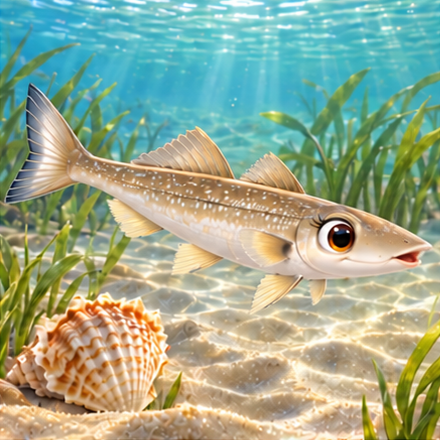
It began with the friends
Raffy and his friends created Oceanese together. Willa helped them make it, then carried it into the wider ocean.
Willa taught Hugo, a humpback whale. Hugo taught Maya, a marine biologist. Imagine Raffy’s surprise when a person greeted him in Oceanese!
From friends in the mangroves
to a whale in the ocean
to a new friend on the shore.
How Oceanese works
Oceanese brings together short melodies, little rhythms and gestures. The friends find ways to share a message using the sounds and movements that work for them.
A hum, whistle, chirp or song. A short musical pattern can help a friend recognise a message.
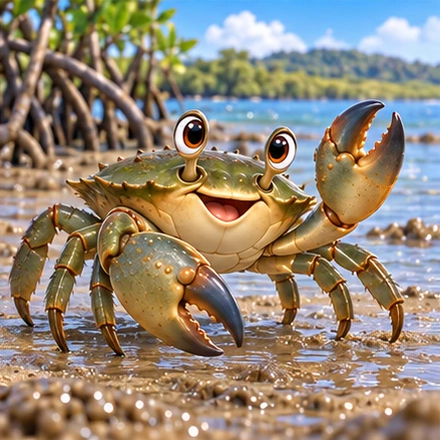
Clicks, taps and gentle beats. Friends who make different sounds can explore a rhythm together.
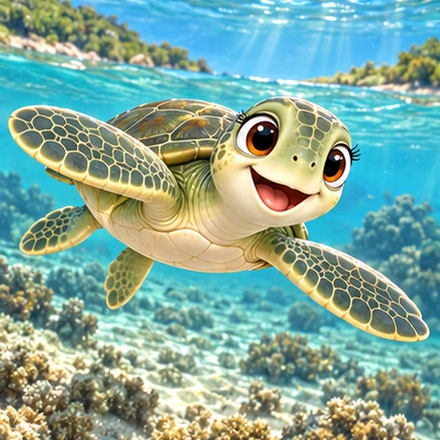
A fin lift, a flipper wave or a turn of the body. A movement can carry a message, too.
Sound and movement can work together, or the friends can find another way. They check that their message has been understood.
“You don’t have to be the same
to understand one another.”
Every friend belongs. They can learn from each other while staying wonderfully themselves.
A small adventure to try
What could your family’s greeting look or sound like?
This is an imagination game, not an official Oceanese expression. Watching or choosing the pattern is joining in, too.
Watch three gentle beats, then make a pattern together. There is no right speed and no score.
Ready when you are. This activity is silent.
The Oceanese sound workshop
Listen to a melody, then try Murray’s click-and-scrape version. Different sounds can carry the same message.
Try our developing sounds. Explore nine Oceanese expressions and an extra call for help. Our sound patterns are still developing, and you can try them with the movements below.
Melody: short and held notes, with a small gap between them.
Claws — click and scrape: a crisp click for a dot and a gentle, held rasp for a dash. This is an imagined sound for Murray, not a recording of real crab behaviour.
Dots mean short; dashes mean long. The scrape lasts three beats, followed by a one-beat gap. The dot is a brief click within a one-beat slot, also followed by a one-beat gap. The melody uses gentle electronic tones as a stand-in for humming. The clicks are sound demonstrations, not recordings of real animals.
Watch the friends share a message
Choose a message and watch its short and long signals. Watch the friends’ pictures come to life with the pattern.
Everyone can join in their own way. Try a sound or movement that feels comfortable, choose a pattern, or simply watch. There’s no right way to join the fun.
Flipper slaps
One slap · a short flipper roll
Ready
Melodies
A short note · a held note
Ready
Click + scrape
One click · a held scrape
Ready
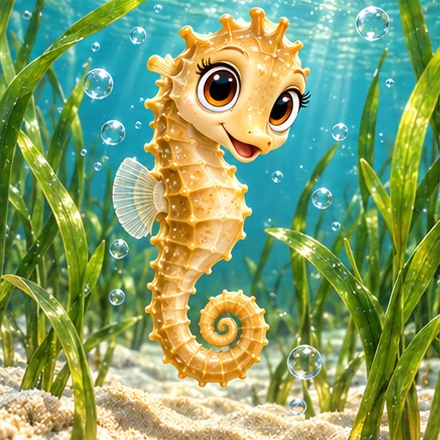
Bubbles
One bubble · a bubble stream
Ready
Choose a message, then press Watch the friends.
Keely’s bubble signals are part of our fictional world. Tia’s long signal is a proposed series of little flipper slaps, shown as a splash roll. Try following along in your own comfortable way.
Nothing plays until you choose it. Choosing another sound stops the previous one.
• • —
Gently wave a fin, paw or hand.
— • —
Touch your chest, then gesture towards your friend.
• —
Extend a fin or tail and tilt your head to one side.
— •
Give a small bow.
— • — •
Press fins together and bow your head, adapting the movement to your body.
• •
Turn your head from side to side, then point.
— —
Bring a fin or tail towards your mouth, then lower it.
—
Make one X with crossed fins, or an equivalent tail or body movement.
• • • •
Repeat the X movement. Faster repetition can signal greater urgency.
• • • — — — • • •
The SOS-inspired sound is ready to try. A matching movement is still being developed.
SOS is three short, three long, three short signals. The melody keeps that Morse timing on one pitch; the claw version is our Oceanese adaptation using clicks and scrapes. Danger means “Watch out!”; Help / distress means “I need help!”
Hello is click · click · scrape. Look is click · click. Please is click · scrape; Thank you reverses it: scrape · click. Try these alongside the movements.
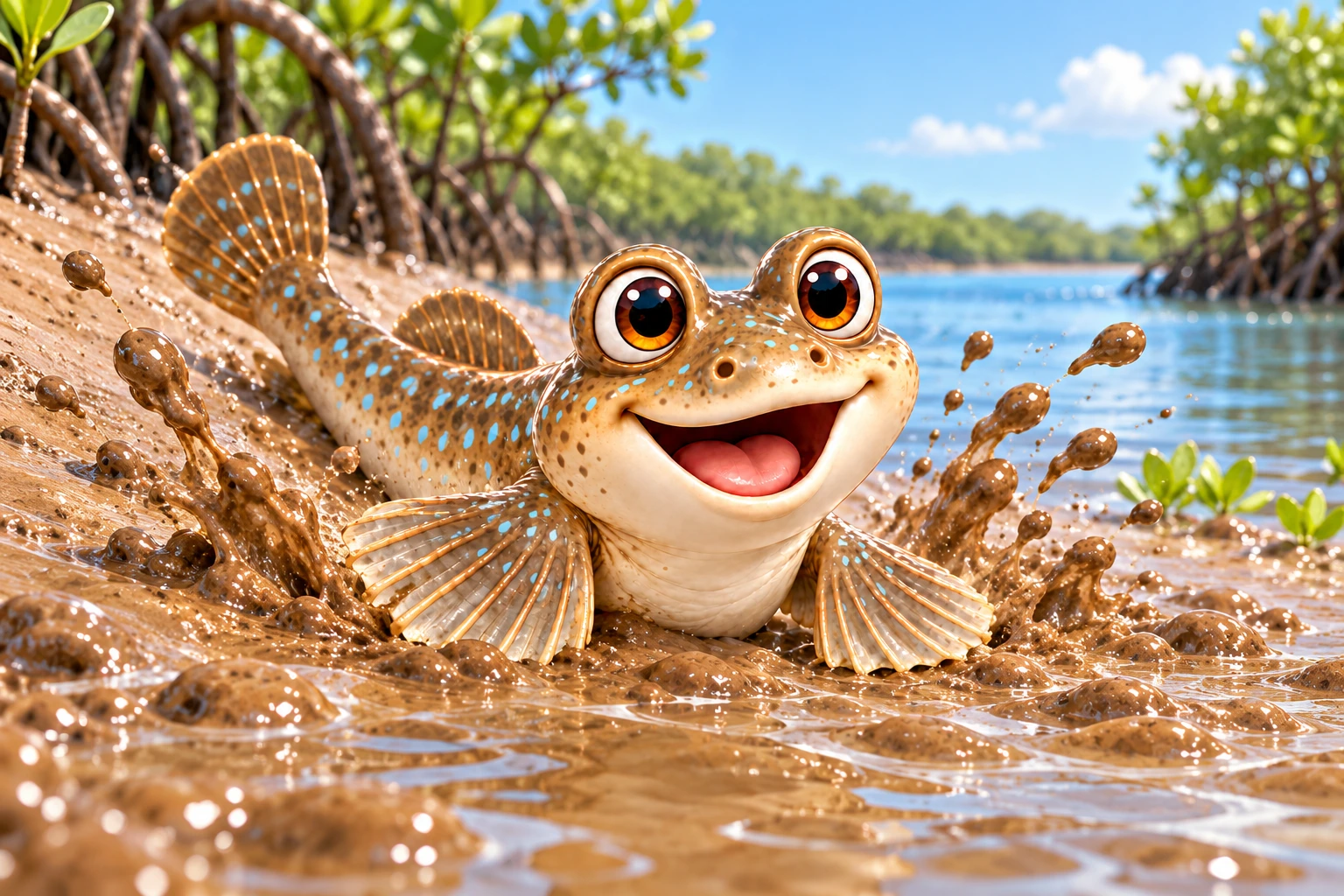
And a favourite saying…
It starts with Raffy and his love of his muddy home. Soon his friends are joining in, too.
Some friendships begin with a little wave. Some begin with a muddy splash.
Read a free adventure ↗OCEANESE TO SHARE · WILLA AND THE BIG SPLASH
Willa turns her silvery side towards the sunlight. Dazza tries a flipper wave. They are learning each other’s hello.
Dazza: “Hello?”
Willa: “Hello!”
Different moves, a shared meaning, and the beginning of a friendship.
Choose a wave, nod, sound or another comfortable way to say hello. Tell your partner what it means, then take turns greeting and answering.
You can point, choose a move or watch, too. There is no hurry. Check that your friend understands.
Draw your hello on page 3 of your Friends Passport. Your invented greeting is for your own play.
Download the Friends Passport (PDF)
Free · 4 A4 pages · Print any pages you like.
Oceanese is the fictional shared language of Raffy’s Ocean Friends. In the books, we read the friends’ conversations in English. Their sounds, rhythms and movements are part of the story’s imaginative world, rather than a guide to how real animals communicate.